

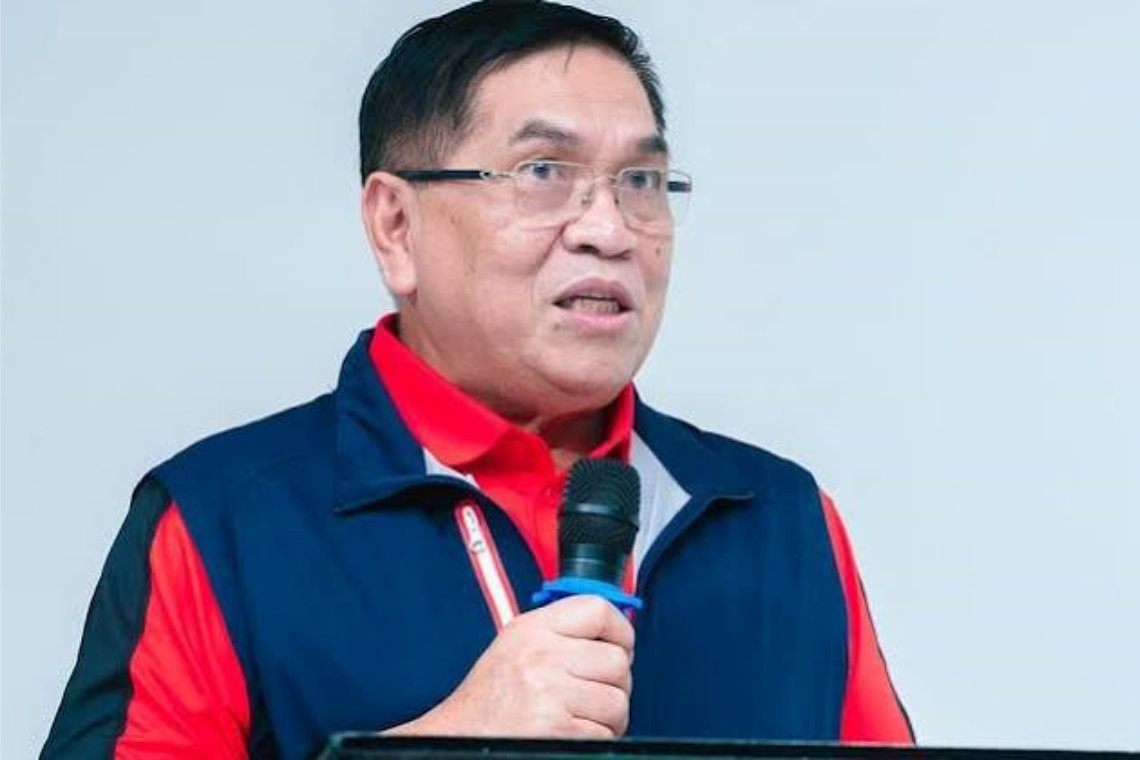
Bangsamoro Chief Minister Abdulraof A. Macacua, who issued Executive Order No. 0009 establishing two offices to oversee the reintegration of MNLF combatants and the development of their communities. Image Source: Inquirer.
The creation of two special offices by the Bangsamoro Autonomous Region in Muslim Mindanao (BARMM) marks a new institutional effort to address commitments that have remained unfinished since the peace agreement between the Philippine government and the Moro National Liberation Front (MNLF) was signed in 1996. Executive Order No. 0009, issued by Chief Minister Abdulraof A. Macacua in November 2026, establishes dedicated mechanisms for transitioning former combatants into civilian life and supporting communities affected by decades of armed conflict.
For Sulu, where the MNLF has maintained a significant historical and political presence, the announcement raises an important question. Can another government initiative translate a three-decade-old peace commitment into sustainable employment, stronger public services and economic opportunities, particularly when the province is no longer administratively part of BARMM?
The timing is significant. The new offices follow the 30th anniversary of the Final Peace Agreement (FPA), celebrated in September, and renewed discussions between the government and the MNLF about outstanding obligations. However, institutional recognition alone cannot guarantee that former fighters and their families will experience meaningful improvements.
Executive Order No. 0009, signed on November 3 and published in the BARMM Official Gazette on November 6, creates two special offices under the Office of the Chief Minister. Their mandate covers the transition of MNLF combatants and the rehabilitation and development of their communities. The initiative seeks to address a persistent weakness in peace implementation, namely the difficulty of coordinating assistance across government institutions. The offices are tasked with developing a comprehensive transition and community development plan, identifying priority projects and coordinating with relevant ministries, national agencies, local governments, MNLF representatives and development partners.
Their responsibilities include livelihood and employment assistance, skills development, socioeconomic support and community infrastructure. They are also expected to facilitate the profiling, verification and registration of transitioning combatants, while monitoring projects and reporting progress to the Special Development Fund-IMPACT Board.
“The initiative seeks to address a persistent weakness in peace implementation, namely the difficulty of coordinating assistance across government institutions.”
The government has already developed programs addressing these needs. During the September 2026 anniversary commemoration, the Office of the Presidential Adviser on Peace, Reconciliation and Unity (OPAPRU) reported that 2,442 MNLF combatants had completed socioeconomic profiling and received transitional cash assistance. Another 1,947 had benefited from cash-for-work initiatives, while 1,141 had received civil registration documents. The MNLF Educational Assistance Program also supported 518 student beneficiaries, according to the same government report. These figures demonstrate that reintegration efforts existed before the new offices were established. The challenge now is to consolidate existing interventions, identify beneficiaries who remain underserved and ensure that assistance leads to sustainable livelihoods rather than temporary relief.
Updated headlines for free, straight to your inbox—no noise, just facts.
We collect your email only to send you updates. No third-party access. Ever. Your privacy matters. Read our Privacy Policy for full details.
The potential impact of the new offices on Sulu requires particular attention because the province occupies a different administrative position from the other areas of the former ARMM. On September 9, 2024, the Supreme Court ruled that Sulu could not be part of BARMM because voters in the province had rejected the Bangsamoro Organic Law during the 2019 plebiscite. The decision was subsequently affirmed, and Executive Order No. 91, issued on July 30, 2025, formally transferred Sulu to Region IX, or the Zamboanga Peninsula. Since fiscal year 2026, government programs in the province have been assigned to the relevant national agencies, the provincial government and local government units.
“The potential impact of the new offices on Sulu requires particular attention because the province occupies a different administrative position from the other areas of the former ARMM.”
This distinction creates an important implementation question. Although Sulu has deep historical connections with the Bangsamoro movement and remains home to MNLF communities, the new BARMM offices cannot automatically be assumed to have the same administrative reach in the province as they do within the autonomous region. Nevertheless, the separation does not eliminate the possibility of cooperation. National peace mechanisms can bring together the Philippine government, the MNLF, BARMM institutions and local authorities to support communities across administrative boundaries.
In March 2025, OPAPRU's MNLF Peace Process Office worked with the Philippine Statistics Authority in Sulu to prepare the verification and socioeconomic profiling of former combatants. The initiative included assistance with national identification and birth registration. A subsequent profiling activity, conducted in June 2025 in Patikul, also targeted former MNLF members from Kaunayan and the Upper and Lower Talipao communities. More recently, the September 28, 2026, service caravan in Indanan brought government assistance directly to MNLF communities. The Bangsamoro government reported the distribution of 500 vegetable packs with fertilizers and 1,000 lanzones seedlings through its Sulu agriculture office. Fisheries beneficiaries also received six seaweed noodle machines, 12 chilling boxes and a fish-drying processing set.
The September activities demonstrate that practical cooperation remains possible despite the province's changed regional affiliation. However, the November executive order raises a further question about whether the newly established offices will develop formal arrangements with Sulu's provincial government and national agencies. Without such coordination, the province risks remaining outside the direct reach of a program designed to address needs that also exist within its MNLF communities. Administrative boundaries should not determine whether communities affected by the same historical conflict can access opportunities for civilian reintegration.
The 1996 Final Peace Agreement also deserves attention beyond its immediate reintegration objectives. Signed on September 2, 1996, by the Philippine government and the MNLF under founding chairman Nur Misuari, the agreement sought to implement the 1976 Tripoli Agreement and establish a framework for political autonomy, peace and development in Muslim Mindanao. It included provisions for integrating MNLF members into government security institutions and providing socioeconomic, educational and livelihood opportunities for those who would not enter military or police service.
For Sulu, the historical significance of this agreement extends beyond the relationship between former combatants and the state. The province has an important place in the history of the Sultanate of Sulu and in the broader political questions surrounding Moro identity, self-determination and territorial claims. However, the implementation of the 1996 agreement must not be confused with the separate Sulu claim over Sabah. The peace agreement explicitly affirmed the sovereignty and territorial integrity of the Republic of the Philippines and placed the settlement within the framework of the Philippine Constitution. Its provisions concern domestic political arrangements and the peaceful development of communities in the southern Philippines.
Although the Sabah question remains separate from the 1996 peace agreement, the success of reintegration initiatives has broader implications for Sulu's political and social future. Communities with stronger economic opportunities, better access to education and functioning public institutions have more tangible foundations for long-term stability. Addressing the needs of former combatants and their families can also strengthen confidence in peaceful political participation.
The renewed government-MNLF dialogue held in Jolo on September 27, 2026, reinforces the importance of this process. Discussions covered outstanding commitments under the agreement, security concerns, a proposed township concept for MNLF communities and the possible reactivation of joint implementation and monitoring mechanisms. The parties also discussed operationalizing the Bangsamoro Development Assistance Fund for socioeconomic projects, subject to legal and budgetary requirements.
“For Sulu, the historical significance of this agreement extends beyond the relationship between former combatants and the state.”
Ultimately, the new offices offer an opportunity to move the MNLF peace process beyond recurring commitments and toward measurable improvements in people's lives. For Sulu, the decisive issue will be whether national and regional institutions can maintain effective cooperation despite the province's exclusion from BARMM. Thirty years after the agreement, its value will increasingly be judged by the opportunities available to communities that experienced decades of conflict.
REFERENCES
Bangsamoro Official Gazette. (2026, November 6). Executive Order No. 0009 s. 2026. Bangsamoro Official Gazette. https://officialgazette.bangsamoro.gov.ph
Bangsamoro. (2026, September 29). BARMM Gov’t joins OPAPRU services caravan in Sulu, brings aids to MNLF communities. Bangsamoro. https://bangsamoro.gov.ph
Office of the Presidential Adviser on Peace, Reconciliation and Unity. (2026, September 2). PBBM leads commemoration of 30th Anniversary of 1996 Final Peace Agreement. Office of the Presidential Adviser on Peace, Reconciliation and Unity. https://peace.gov.ph
Philippine Statistics Authority. (2025, August 29). The Province of Sulu officially transferred to Region IX (Zamboanga Peninsula). Philippine Statistics Authority. https://psa.gov.ph
The Lawphil Project. (1996, September 2). Philippines Peace Agreement. The Lawphil Project. https://lawphil.net
Supreme Court of the Philippines. (2024, September 9). SC upholds validity of Bangsamoro Organic Law; declares Sulu not part of Bangsamoro Region. Supreme Court of the Philippines. https://sc.judiciary.gov.ph
iMinds. (2026, October 2). GPH, MNLF discuss remaining commitments under 1996 peace agreement. iMinds. https://iminds.ph
Philippine Statistics Authority. (2025, July 28). PSA Sulu collaboration with the Office of the Presidential Adviser on Peace, Reconciliation and Unity (OPAPRU) on the verification and socio-economic profiling of MNLF combatants in Sulu. Philippine Statistics Authority. https://rssobarmm.psa.gov.ph

KnowSulu is your trusted source for verified facts, news, and legal insights about the Sulu region. Committed to integrity, our mission is to empower the people of Sulu by providing accurate, transparent, and reliable information that matters.